

LÊ TÙNG CONSTRUCTION’S PERSPECTIVE
The Ministry of Construction’s guidance document on adjusting construction contracts amidst significant fluctuations in fuel and construction material prices is a crucial and timely legal framework for both investors and contractors. From a contract management perspective, Lê Tùng Construction recommends that all parties conduct transparent quantity surveying (QS), detailed phased acceptance, and apply standardized price adjustment formulas to ensure balanced benefits and maintain smooth project progress.
The Ministry of Construction recently issued Document No. 6761/BXD-KTQLXD regarding the adjustment of construction contracts when there are fluctuations in fuel and construction material prices. This document was issued in accordance with the task assigned by the Prime Minister in Official Dispatch No. 213/TB-VPCP dated April 25, 2026, and Resolution No. 122/NQ-CP dated May 6, 2026, of the Government.
Based on current legal provisions
According to the Ministry of Construction, contract adjustments must be based on current legal provisions related to force majeure events and fundamental changes in circumstances.

Construction of Hữu Nghị – Chi Lăng expressway. Photo: Lại Ngọc Hà
Specifically, the 2015 Civil Code stipulates that force majeure events must meet three conditions: occurring objectively, unpredictably, and being insurmountable despite all necessary measures taken. Concurrently, fundamental changes in circumstances must meet five conditions as stated in Article 420.
For Construction Law No. 135/2025/QH15, effective from July 1, 2026, Clause 1, Article 13 stipulates that force majeure events in construction activities include: natural disasters, environmental catastrophes, epidemics, national security emergencies, social order and safety emergencies, national defense emergencies, strikes, embargoes, archaeological activities, and other cases as regulated by relevant laws.
Meanwhile, Clause 2, Article 13 stipulates that fundamental changes in circumstances in construction activities include cases where: the State changes policies and laws; unforeseen abnormal geological conditions, and other cases as regulated by law.
Legal Framework for Contract Price Adjustment in Force Majeure Cases
Clause 7, Article 95 on transitional provisions stipulates: Construction contracts signed before July 1, 2026, shall be executed according to the provisions of Construction Law No. 50/2014/QH13 and may apply the provisions of this Law in cases of force majeure events and fundamental changes in circumstances.
According to the Ministry of Construction’s guidance, lump-sum contracts and fixed-unit-price contracts may only have their unit prices adjusted in cases of force majeure as stipulated by the 2014 Construction Law; the 2014 Construction Law amended and supplemented by Law No. 62/2020/QH14; Decree No. 37/2015/NĐ-CP dated April 22, 2015, of the Government detailing construction contracts (Articles 15, 36); Decree No. 50/2021/NĐ-CP dated April 1, 2021, of the Government amending and supplementing some articles of Decree No. 37/2015/NĐ-CP (Clause 12, Article 1).
Furthermore, construction contracts may be amended under circumstances of fundamental changes in contract performance as stipulated by the 2023 Bidding Law amended and supplemented by Law No. 90/2025/QH15 (Article 70) and the 2015 Civil Code (Article 420).
The Ministry of Construction emphasizes that the adjustment of unit prices and contract prices must be stipulated in Article 38 of Decree No. 37/2025/NĐ-CP, as amended and supplemented by Clause 14, Article 1 of Decree No. 50/2021/NĐ-CP.
Accordingly, the parties must specifically agree on the cases where construction contract unit prices and prices can be adjusted; the order, scope, method, and basis for contract price adjustment; and the contract price adjustment method must be consistent with the contract type and the nature of the work in the construction contract.
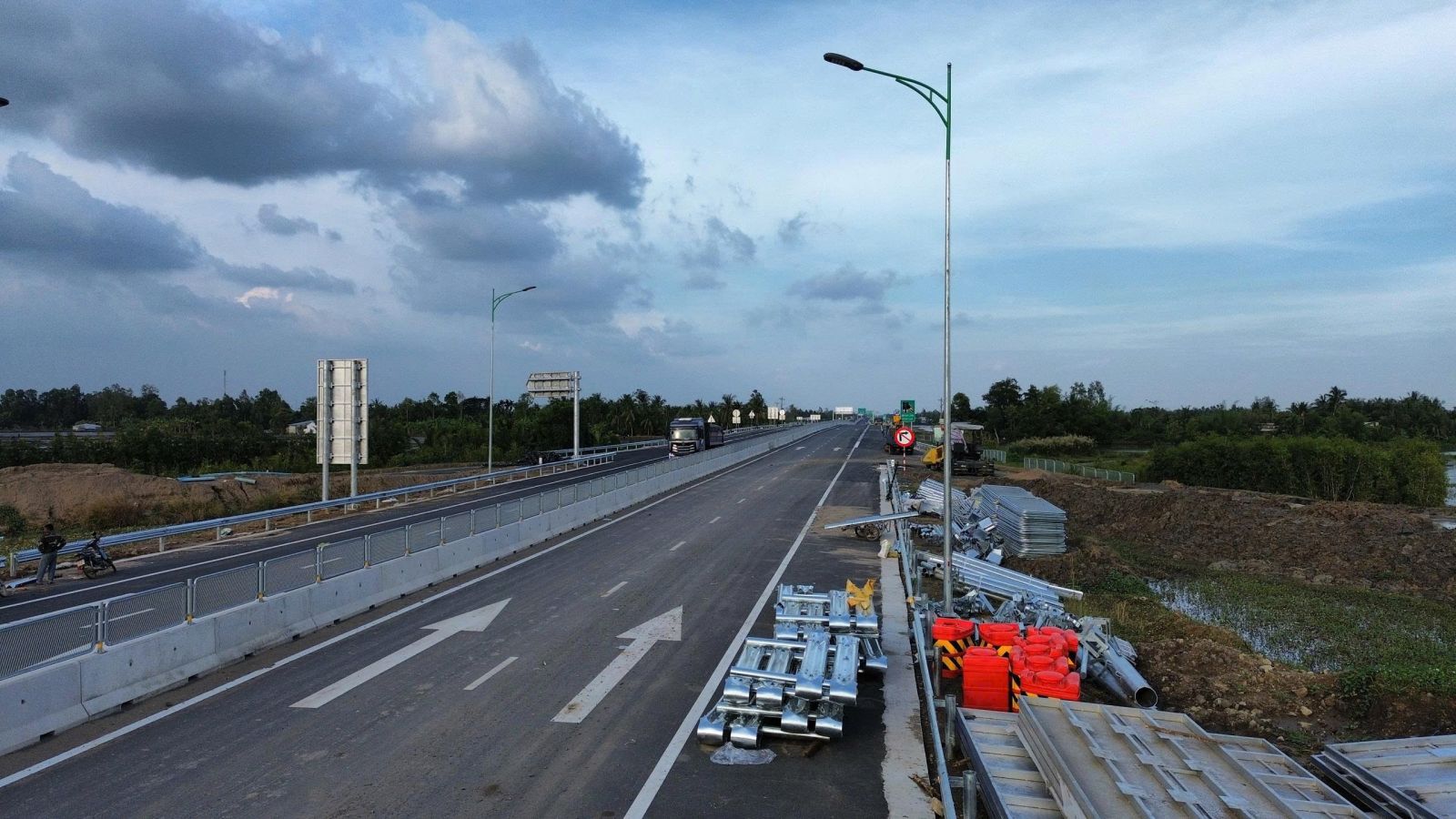
Cross-sectional drawing of subgrade construction method on site. Photo: Lại Ngọc Hà
Investors Proactively Coordinate to Assess the Impact of Material Price Fluctuations
Contract amendments in cases of force majeure or fundamental changes in circumstances are stipulated in Point d, Clause 2, Article 84 of Construction Law No. 135/2025/QH15 (including amendments to contract type and contract price adjustment).
Investors must specifically assess the impact of price fluctuations.
The Ministry of Construction requests ministries, sectors, and localities to direct relevant agencies and units to strictly implement Official Dispatch No. 25/CĐ-TTg dated March 21, 2026, of the Prime Minister on strengthening solutions for managing and stabilizing fuel, raw material, and construction material prices; resolving difficulties and obstacles; and accelerating the progress of site clearance and construction of important national projects and key projects in the transportation sector.
Along with previous guidance documents from the Ministry of Construction on managing and stabilizing construction material prices and resolving difficulties for construction investment projects.
Accordingly, based on the fluctuations in fuel and construction material prices over the past period, investors need to work with contractors to analyze and assess the impact on each specific contract, such as the signing time, the volume already implemented, and the measures taken by the contractor to minimize the impact.
By comparing with legal conditions and regulations, it can be determined whether this event is considered force majeure or a fundamental change in circumstances, to decide on applying and taking responsibility for the content of contract amendments as stipulated in Article 84, Clause 7, Article 95 of Construction Law No. 135/2025/QH15, ensuring project investment efficiency, avoiding losses and waste, harmonizing benefits, and sharing risks among parties.
The Ministry of Construction also requests agencies and units to thoroughly study the extent of fuel and construction material price fluctuations to select appropriate price adjustment methods, input data sources, scope, and adjustment factors when signing or amending construction contracts.
Original article source: Construction Magazine